Why does my dog keep jumping up at people?
Updated: Sep 12

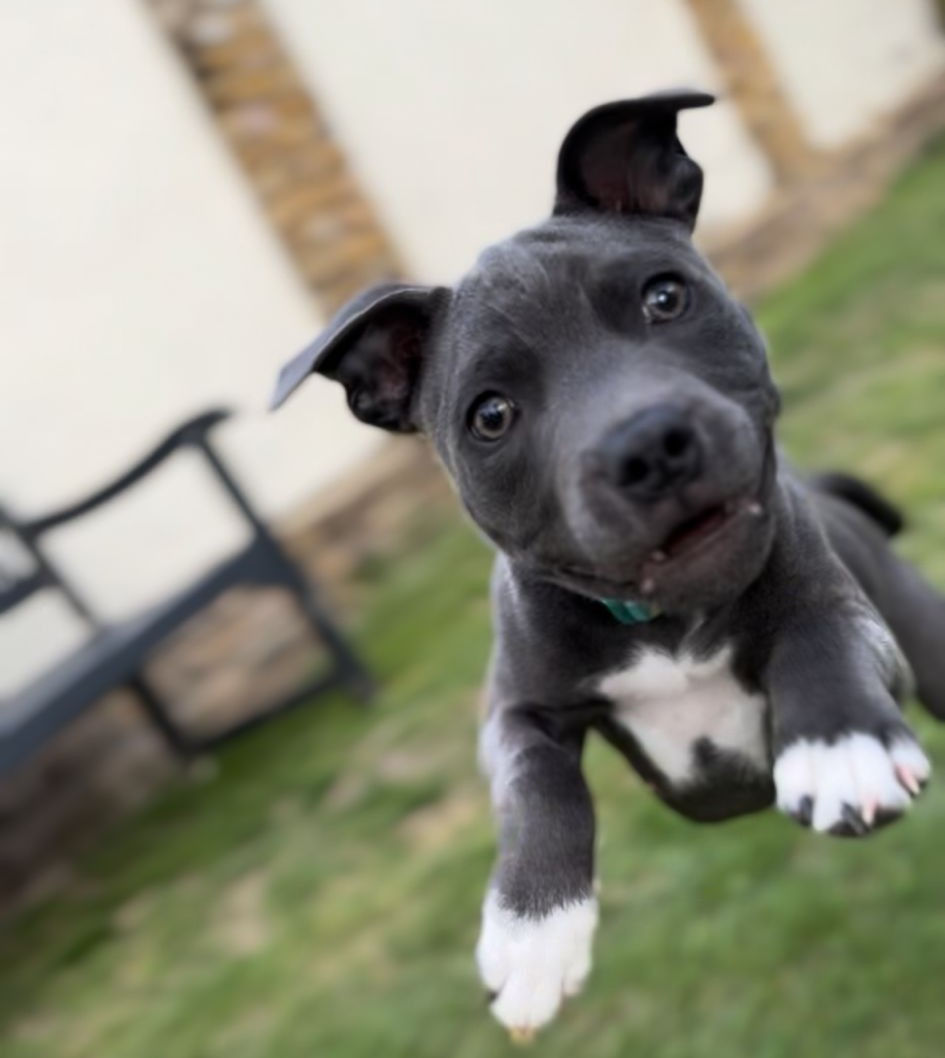
A visitor walks through your door and your dog launches themselves at them. You ask your dog to get down, turn away or gently push them off, but moments later, they are jumping up again. Jumping up can be frustrating, embarrassing and, with a larger dog, potentially dangerous.
Quite often we humans train our tiny cute puppies to jump up by giving them a huge fuss every time they do it! When they get bigger and are jumping up on us, we wonder what they are doing it!
Some of the other reasons dogs jump up include them wanting to be closer to us - our faces and ands are much higher than they are, so jumping can be an effective way to make contact and gain our attention. We often have good stuff in our hands which is high up and which they can reach by jumping.
Some dogs jump because they are excited. Others feel overwhelmed when people arrive and don’t yet know what else to do with all that energy. Nervous dogs may also jump as part of conflicted or appeasing behaviour.
The behaviour may look the same, but the emotions behind it can be very different.
Before deciding how to respond, it helps to consider what your individual dog may be feeling.
Jumping often works
Dogs repeat behaviours that produce worthwhile results. When a dog jumps up, people frequently:
Look at them
Speak to them
Touch or push them
Say their name
Laugh or become animated
Even if we are saying “No” or “Get down,” we may still be giving the dog exactly what they wanted: our attention. Occasionally rewarding jumping can make it particularly persistent. If your dog is ignored sometimes but greeted enthusiastically at other times, it can be difficult for them to understand what is expected.
Excitement can make learning difficult
Doorways and greetings are often highly exciting moments. When your dog is already leaping, spinning, barking or grabbing at clothing, they may be too overwhelmed to respond to a cue they normally understand.
This is why repeatedly asking for a sit in the middle of a chaotic greeting doesn’t always work.
Practising calm greeting skills when nothing exciting is happening gives your dog a much better chance of succeeding when somebody eventually arrives.
Think about what you would like them to do
“Stop jumping” tells us what we don’t want, but it doesn’t tell the dog what to do instead. Would you like your dog to:
Keep all four paws on the floor?
Sit to greet somebody?
Go to a mat when the doorbell rings?
Collect a toy?
Wait behind a gate until they feel calmer?
The most appropriate choice will depend on your dog, your household and the circumstances. A young, excitable dog greeting a familiar family member may need a different plan from a nervous dog who struggles when unfamiliar visitors enter the home.
Everyone needs to follow the same plan
Greeting training becomes much harder when different people respond in different ways. One person may ask your dog to sit, another might allow them to jump and somebody else may push them away while laughing. From your dog’s perspective, the rules keep changing. Having a clear plan makes it much easier for family members and visitors to respond consistently, and for your dog to work out which behaviour will be rewarded.
Get your free Calmer Greetings guide
I have created a free Calmer Greetings guide to help you begin teaching your dog a safer and more manageable way to greet people. It includes practical guidance on:
Preparing before visitors arrive
Preventing your dog from repeatedly practising jumping
Choosing an alternative greeting behaviour
Teaching the new behaviour in manageable stages
Helping family members and visitors respond consistently
Adapting the plan to suit your individual dog
The guide is available free inside the Delightful Dogs WhatsApp community, alongside practical training advice, useful resources and information about upcoming training walks, social walks and online masterclasses.
Let's help your dog understand exactly what you want them to do instead of jumping and see how quickly you can change their behaviour!
Hope to see you soon,
Christine x



Comments